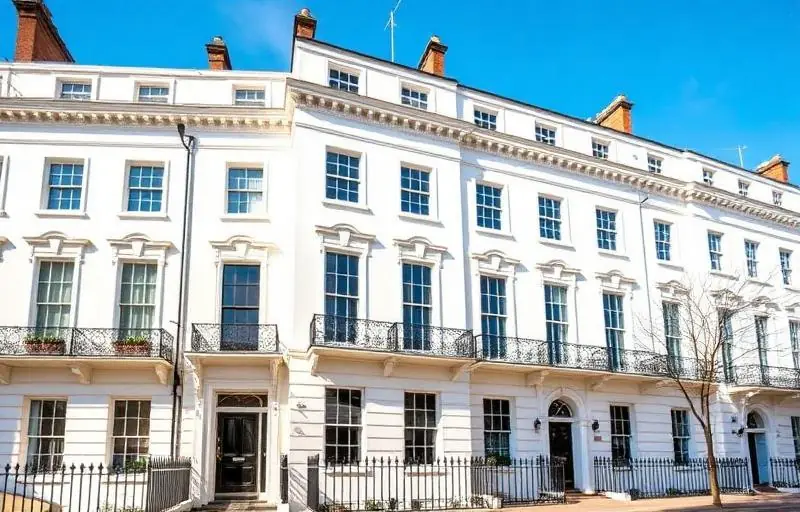
In the historic streets of Kensington, Chelsea, and Mayfair, the architectural landscape is a testament to London’s enduring heritage. From the grand Georgian terraces surrounding St. James’s Park to the intricate Victorian villas of Greenwich, these period properties require a specialized level of care that modern, synthetic materials simply cannot provide. For homeowners looking to preserve the structural integrity and aesthetic charm of their residences, the choice of paint is not merely a decorative decision—it is a conservation necessity.
Traditional masonry in Central and South London was designed to "breathe." Constructed using lime mortar and porous brickwork, these buildings manage moisture by allowing it to evaporate through the walls. However, the introduction of modern acrylic and "plastic" masonry paints has inadvertently caused significant damage to many period homes. By sealing the surface, these modern coatings trap moisture within the substrate, leading to damp, blown plaster, and decaying brickwork.
This is where limewash and mineral paints become essential. These traditional and silicate-based finishes offer the perfect synergy of historical authenticity and modern performance. As specialists in premium property maintenance, coreMaint understands that protecting a Knightsbridge townhouse or a Greenwich heritage home requires materials that work with the building, not against it. In this guide, we explore why limewash and mineral paints are the gold standard for London’s period architecture.
The Breathability Factor: Why Period London Homes Need Mineral Finishes
The primary enemy of London’s historic brickwork is "sealed-in" moisture. In a city known for its humid climate and frequent rainfall, walls must be able to release water vapor. Traditional limewash and modern mineral (silicate) paints are highly vapor-permeable, meaning they allow moisture to escape freely.
The Science of Silicification
Unlike standard emulsion paint, which sits on top of a surface like a plastic film, mineral paints (such as those from Keim or Beeck) undergo a chemical process called silicification. The paint bonds molecularly with the mineral substrate (brick, stone, or lime render), creating a breathable, crystalline structure. This bond is so strong that the paint becomes part of the wall itself, rather than a layer that can peel or flake away.
Preventing Damp and Spalling
When moisture is trapped behind a layer of non-breathable acrylic paint, it undergoes freeze-thaw cycles during London winters. This causes the water to expand, cracking the paint and eventually leading to "spalling," where the face of the brick or stone literally breaks off. By opting for a breathable finish, homeowners in areas like Chelsea and Mayfair can significantly reduce the risk of structural damp and costly masonry repairs.
Limewash vs. Mineral Paint: Which is Right for Your Property?
Choosing between traditional limewash and modern mineral paint depends on your property’s specific needs, your desired aesthetic, and the level of maintenance you are prepared to undertake.
1. Traditional Limewash
Limewash is one of the oldest decorative finishes in the world, consisting of slaked lime and water. It is the most authentic choice for Grade I and II listed buildings.
- Aesthetic: It produces a soft, matte, and slightly mottled "glow" that develops a beautiful patina over time.
- Benefits: It is naturally antiseptic, helping to prevent mold growth, and is 100% eco-friendly.
- Cons: It is less durable than modern alternatives and typically requires re-coating every 2–5 years. It is best suited for sheltered elevations or properties where historical accuracy is the top priority.
2. Mineral (Silicate) Paints
Developed in the 19th century to mimic the look of limewash but with industrial-strength durability, mineral paints are the go-to for many South London renovations.
- Aesthetic: Available in a vast array of light-fast pigments that do not fade under UV light. It provides a flat, stony matte finish.
- Benefits: Extremely long-lasting (often 15–20 years+), highly resistant to acid rain and urban pollution, and prevents alkaline "bloom."
- Cons: Higher initial material cost, though this is offset by its longevity.
Get a Free Quote for a consultation on which finish suits your specific London borough's building regulations.
The Practical Benefits for the Central London Homeowner
Living in high-traffic areas like Central London presents unique challenges for property exteriors. From vehicle emissions to the "urban heat island" effect, your home’s façade is under constant pressure.
- UV Stability: Organic paints (standard emulsions) contain binders that break down under sunlight, causing colors to fade and surfaces to chalk. Mineral paints use inorganic pigments that remain vibrant for decades, even on South-facing elevations in Greenwich.
- Pollution Resistance: The chemical bond of silicate paint creates a surface that is less "tacky" than acrylic. This means soot, dust, and London grime are less likely to stick to your walls, keeping your home looking cleaner for longer.
- Fire Safety: Mineral paints are naturally non-combustible. In an era where fire safety is paramount for multi-occupancy period buildings in Kensington and Chelsea, using a paint that does not emit toxic fumes or spread flames is a significant advantage.
Step-by-Step: Applying Mineral Finishes the coreMaint Way
Achieving a flawless finish with limewash or mineral paint requires significantly more skill than a standard paint job. At coreMaint, we follow a rigorous process to ensure the longevity of the application.
- Surface Preparation: We begin by removing all previous non-breathable coatings. This often involves gentle steam cleaning (DOFF system) to ensure the masonry is not damaged.
- Repairing the Substrate: Any cracks are filled using lime-based fillers to maintain the breathability of the entire wall system.
- Priming: For mineral paints, a silicate primer is applied to equalize the suction of the masonry.
- Application: Limewash is applied in multiple "thin-as-milk" coats, usually 3 to 5, allowing for carbonation between layers. Mineral paints are typically applied in two coats using specialized brushes or airless sprayers for a uniform finish.
- Curing: Unlike acrylics that dry in hours, these finishes need specific environmental conditions to cure correctly, making the timing of London exterior painting projects crucial.
Sustainability and Eco-Friendly Living
As London moves toward a greener future, the materials we use in our homes matter. Both limewash and mineral paints are among the most sustainable options on the market.
- Low VOCs: They contain zero or ultra-low Volatile Organic Compounds, ensuring better air quality for your family and the neighborhood.
- Natural Ingredients: Derived from earth-mined minerals and lime, these paints have a much lower carbon footprint during production compared to petroleum-based synthetics.
- Longevity: By lasting twice as long as standard paints, mineral coatings reduce the frequency of repainting, saving resources and reducing waste over the building's lifecycle.
Preserving the Value of Your London Estate
In the premium real estate markets of Knightsbridge and Mayfair, the "curb appeal" and structural integrity of a property directly impact its valuation. Discerning buyers and heritage surveyors look for signs of proper maintenance. Seeing the soft, breathable finish of a professionally applied mineral paint suggests a home that has been cared for with an eye toward the long term.
Investing in these high-quality materials prevents the common "quick-fix" cycle of painting every three years only to watch the surface bubble and peel. It is an investment in the history of London itself.
Expert Property Maintenance with coreMaint
At coreMaint, we specialize in the delicate balance of preserving heritage while providing modern durability. Whether you own a stucco-fronted terrace in Kensington or a brick-built Victorian home in Greenwich, our team of skilled artisans understands the nuances of limewash and mineral paint application.
We provide a comprehensive service, from initial moisture testing and surface analysis to the final, meticulous application of premium mineral finishes. Our goal is to ensure your property remains a landmark of beauty and structural health for generations to come.
Ready to protect your period property with the finest breathable finishes available?
Contact Us today to speak with one of our heritage specialists or Get a Free Quote for your upcoming exterior renovation. Let coreMaint bring out the best in your London home.