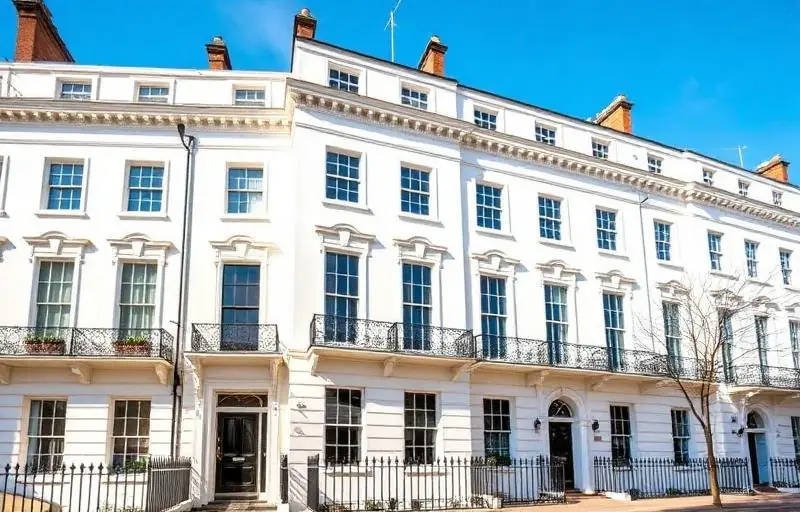
London’s architectural heritage is defined by its breathability. From the grand stucco terraces of Kensington and Chelsea to the historic brickwork of Greenwich, the city’s period properties were originally constructed using traditional materials like lime mortar and porous brick. These buildings were designed to "breathe," allowing moisture to move freely through the structure and evaporate. However, decades of modern renovations have often seen these breathable surfaces covered in thick, plastic-based acrylic paints, leading to trapped moisture, blown plaster, and internal damp.
As property owners in Central London increasingly seek to restore the integrity of their homes, two traditional finishes have surged in popularity: limewash and mineral paint. These aren’t just aesthetic choices; they are functional necessities for the longevity of a period building. At coreMaint, we have seen firsthand how switching to these vapor-permeable finishes can transform a property’s health, especially in the microclimates of high-density areas like Mayfair and Knightsbridge.
In this guide, we will explore why limewash and mineral paints are the gold standard for London’s historic architecture, how they differ, and what you need to know before embarking on a restoration project. Whether you are maintaining a Grade II listed townhouse or a Victorian terrace, understanding the science of breathability is the first step toward a lasting finish.
The Science of Breathability in Period London Homes
To understand why limewash and mineral paints are superior, we must first look at the "sealant" problem. Modern masonry paints are essentially liquid plastic. While they offer high water resistance, they are non-breathable. In an older property, moisture enters the walls from the ground (rising damp) or from internal humidity. If the exterior is sealed with acrylic paint, that moisture remains trapped, eventually causing the paint to bubble, the render to crack, and the structural masonry to degrade.
Why London Homes Require Special Consideration
London’s climate is notoriously damp, and in areas near the Thames like Greenwich, humidity levels can be consistently high. Furthermore, properties in Central London often face "urban heat island" effects, where rapid temperature fluctuations cause building materials to expand and contract.
Traditional lime-based materials are flexible and porous. By using finishes that match the original substrate, you allow the building to regulate its own moisture levels. According to heritage building experts, using non-breathable coatings on solid-walled properties can increase the risk of timber decay and mould growth by up to 40% over a ten-year period.
Limewash: The Traditional Choice for Historic Masonry
Limewash is one of the oldest decorative finishes in the world. It is made from lime putty (calcium hydroxide) diluted with water. When applied, it undergoes a chemical reaction called carbonation, where it absorbs CO2 from the air and turns back into limestone, bonding deeply with the surface.
The Aesthetic Appeal in Kensington and Mayfair
Limewash is prized for its unique, matte, and slightly translucent finish. It doesn’t "coat" the brickwork; it stains it. This creates a soft, mottled effect that glows in the London light. In high-end neighborhoods like Kensington, limewash provides a sense of understated luxury that modern paints simply cannot replicate.
The Benefits of Limewash
- High Breathability: It is the most vapor-permeable finish available, allowing moisture to evaporate freely.
- Natural Antiseptic: Lime is naturally alkaline, which inhibits the growth of mould and algae—a common issue in shaded London mews.
- Eco-Friendly: It contains no VOCs (Volatile Organic Compounds) and actually absorbs carbon dioxide as it cures.
- Self-Healing: Small hairline cracks can often "self-heal" as the lime reacts with rainwater and migrates into the gaps.
Limitations to Consider
While beautiful, limewash is not a "set and forget" product. It is sacrificial, meaning it wears away over time and usually requires a fresh coat every 2-5 years depending on weather exposure. It also requires specific weather conditions for application—ideally overcast, damp days—which, fortunately, are plenty in London.
Mineral Paint: The Modern Solution for Durability
If limewash is the traditional choice, mineral paint (specifically silicate paint) is the high-performance evolution. Developed in the 19th century to mimic the appearance of limewash but with greater durability, mineral paint is the preferred choice for many coreMaint clients in Knightsbridge and Belgravia.
The Silicification Process
Unlike acrylic paint that sits on top of the surface, mineral paint forms a chemical bond with the substrate through a process called silicification. It essentially becomes part of the stone or brick itself.
Why Choose Mineral Paint Over Limewash?
- Extreme Longevity: A high-quality mineral paint application can last 15-20 years without peeling or flaking.
- UV Resistance: Mineral pigments are inorganic, meaning they do not fade in direct sunlight—perfect for south-facing facades in South London.
- Hydrophobic yet Breathable: Many modern mineral paints are designed to shed liquid water (rain) while still allowing water vapor (steam/damp) to escape from the inside.
- Application Range: It can often be applied over existing mineral-based finishes, whereas limewash requires a completely porous surface.
Get a Free Quote for your mineral paint project today.
Practical Tips for Your Restoration Project
Switching from modern paints to traditional finishes requires careful planning. You cannot simply paint limewash over an old layer of Dulux Weathershield.
Surface Preparation: The Critical Step
For limewash or mineral paint to work, the surface must be "open." This often involves:
- Paint Stripping: Removing layers of old plastic paint using non-damaging methods like the DOFF steam cleaning system.
- Repairing Render: Any patches must be done with lime-based mortar, not cement, to maintain breathability.
- Dampening the Wall: Unlike modern paints which require a bone-dry surface, limewash requires the wall to be damp during application to prevent the lime from drying too quickly and "dusting off."
Choosing the Right Colour for London Streets
When selecting a palette for your Chelsea or Mayfair home, consider the historic context:
- London Stock Brick: Warm creams, pale ochres, and "off-whites" complement the yellow-grey tones of local brick.
- Stucco Terraces: Classic whites and stones are traditional, but muted sage greens and deep terracottas are increasingly popular for architectural details.
- Sample Testing: Always test a patch. Limewash dries significantly lighter than it appears when wet.
Comparison Table: Limewash vs. Mineral Paint
| Feature | Limewash | Mineral (Silicate) Paint |
|---|---|---|
| Composition | Lime Putty + Water | Potassium Silicate + Inorganic Pigments |
| Lifespan | 2–5 Years | 15–20 Years |
| Finish | Mottled, Matte, Translucent | Flat Matte, Uniform |
| Breathability | Extremely High | High |
| Cost | Lower material cost, higher labor | Higher material cost, lower maintenance |
| Best For | Historic restoration, Grade I/II Listed | Modernized period homes, high-traffic areas |
Why Professional Application is Essential
While a DIY approach might be tempting, applying these materials in an urban environment like Central London presents unique challenges. Professional contractors like coreMaint understand the nuances of suction control, weather windows, and the chemical requirements of different masonry types.
Applying limewash in direct sunlight or during a London frost can cause the finish to fail immediately. Similarly, mineral paints require precise mixing and application techniques to ensure the chemical bond occurs correctly. If you are investing in the long-term health of a premium property, professional application ensures that the breathability benefits are actually realized.
Conclusion: Investing in Your Home’s Future
Choosing limewash or mineral paint for your London home is an investment in both aesthetics and structural integrity. By moving away from suffocating modern synthetics, you allow your property to breathe, reducing the risk of damp and preserving the beautiful masonry that defines Kensington, Mayfair, and Chelsea.
At coreMaint, we specialize in the meticulous care of London’s finest properties. Our team understands the delicate balance between modern luxury and heritage preservation. Whether you are looking to refresh a historic facade or protect a newly restored render, we provide the expertise needed to deliver a flawless, breathable finish.
Ready to restore the natural beauty of your period home? Contact Us today to discuss your project, or Get a Free Quote to start your journey toward a healthier, more beautiful property.